Criminal Justice

“[L]awyers in criminal courts are necessities, not luxuries. The right of one charged with crime to counsel may not be deemed fundamental and essential to fair trials in some countries, but it is in ours.”
-- Justice Hugo Black,
Gideon v. Wainwright, 1963


The rights guaranteed to individuals under suspicion, criminal defendants, and prisoners are fundamental rights that protect all Americans from governmental abuse of power. These rights include the guarantee against unreasonable search and seizure, the right to reasonable bail, the right against self incrimination, the right to counsel, the right to be acquitted unless the government can prove its case beyond a reasonable doubt, the right to a jury of one’s peers and the right to be free from cruel and unusual treatment.


These protections were included in our federal and state constitutions in order to protect innocent persons who may be wrongfully suspected or accused of a crime. The framers understood that it is more important for the government to follow the rule of law than it is to obtain a guilty verdict in every case.
Litigation

State v. Marquez-Marquez

ACLU Challenges Unfair Bail Forfeiture

Burkett et al v. County of Jackson et al

Our settlement with Jackson County officials over a strip search of female inmates that occurred two years ago has now been finalized.

Legislation

Medical Marijuana Discrimination (HB 3635)

We anticipated legislation allowing employers to discriminate against employees who are medical marijuana cardholders.  We defeated this proposal in 2007 mostly because time ran out before the bill was moved to the House floor.  Representative Mike Schaufler (D-Happy Valley) insisted on introducing similar legislation for this short session.  However, because House leadership would only allow a “compromise” version to go through, the bill was never heard because there was no compromise to which either the proponents (business community) or opponents (ACLU and othe

ACLU Opposes Measure 61

Would Significantly Expand Mandatory Minimum Sentencing for Property and Drug Crimes

Other

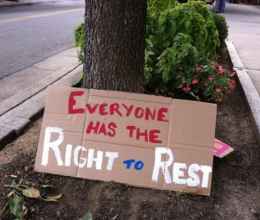
ACLU Testifies Against Portland's Latest "Sit/Lie" Ordinance

April 29, 2010 -- Today the ACLU of Oregon testified before Portland City Council raising

Portland’s 2006 Sit/Lie Ordinance: Process Abandoned at 11th Hour?

The ACLU explains why, despite six months of hard work in the mayor’s SAFE workgroup, it came out against the proposed ordinance