
As immigration agents patrolled the Twin Cities in January, 30-year-old R.M. and his family insisted on staying home in the suburbs of Minneapolis. That was, until his 5-year-old daughter really wanted ice cream. “I’m brave,” she said. “I can go.” So they grabbed their passport cards and left for the ice cream shop. When they returned, U.S. Immigration and Customs Enforcement (ICE) agents were parked blocking his driveway.
R.M. is a citizen and Latino, and he is identified by his initials for fear of retaliation. He testified in court in February detailing a harrowing incident with ICE as part of an ACLU lawsuit where Minnesotans allege racial profiling, unlawful seizure and arrest at the hands of Department of Homeland Security agents. At that moment, he said he felt like, “I have no rights.”
The American Civil Liberties Union, ACLU of Minnesota, Covington & Burling LLP, Greene Espel PLLP, and Robins Kaplan LLP filed a class-action lawsuit against the Trump administration on behalf of three community members — and a class of similarly situated people — whose constitutional rights were violated by federal agents, including Immigration and Customs Enforcement (ICE) and Customs and Border Protection (CBP). The court recently held that we had made a clear showing that ICE and CBP adopted unlawful and unconstitutional policies authorizing stops based on race or ethnicity and without reasonable suspicion of an immigration violation, as well as making arrests without probable cause. The court denied our request for a preliminary injunction, which would have halted the practices while the case proceeded. This is due to a finding that the plaintiffs are not at immediate risk, largely due to the drawdown in federal agents. However, ICE and CBP presence persists throughout rural areas of Minnesota as well as areas of the Twin Cities. The decision is nevertheless an important affirmation of the rights of Somali and Latino Minnesota residents, and we are continuing to fight for our clients’ rights.
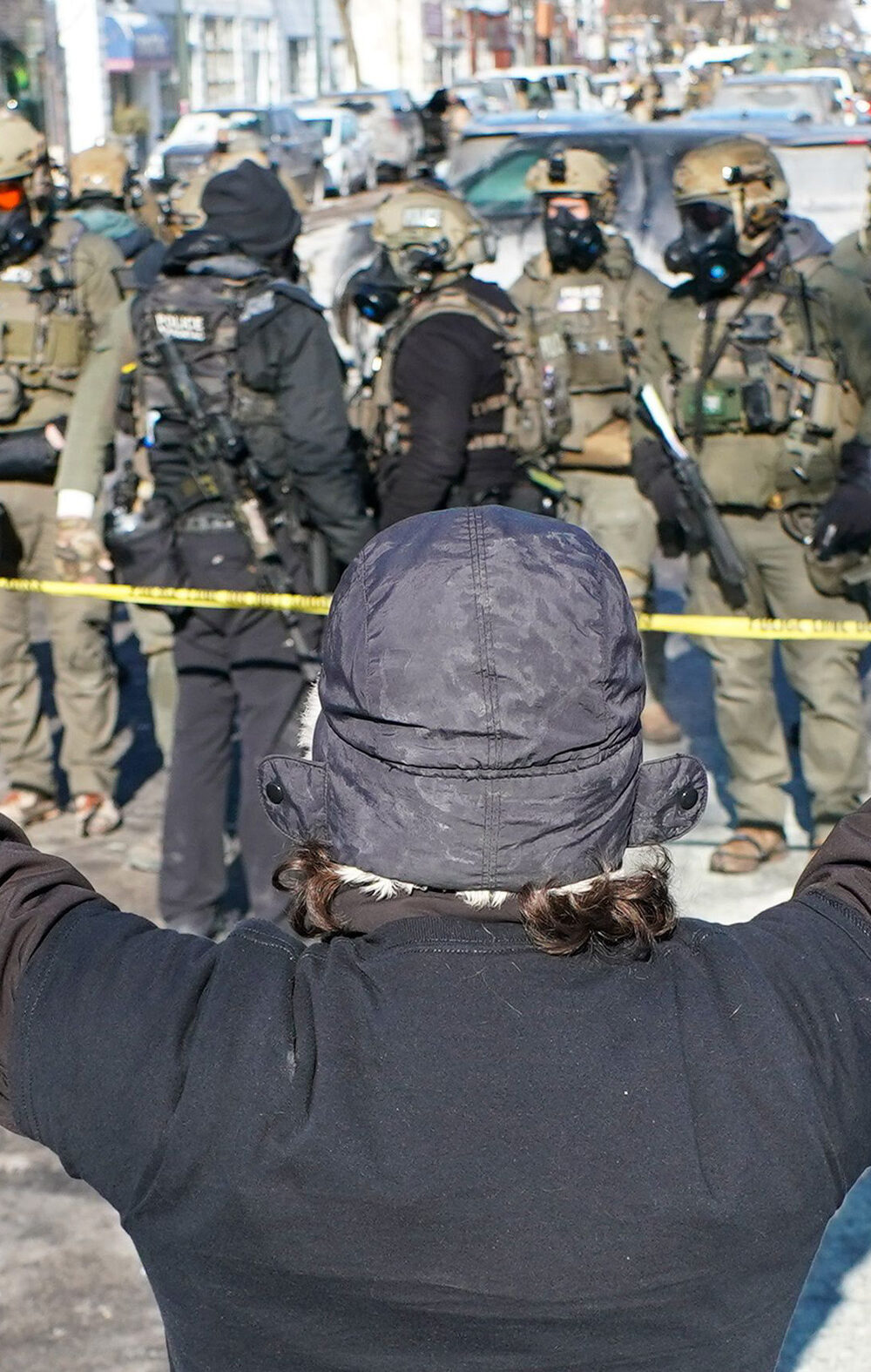
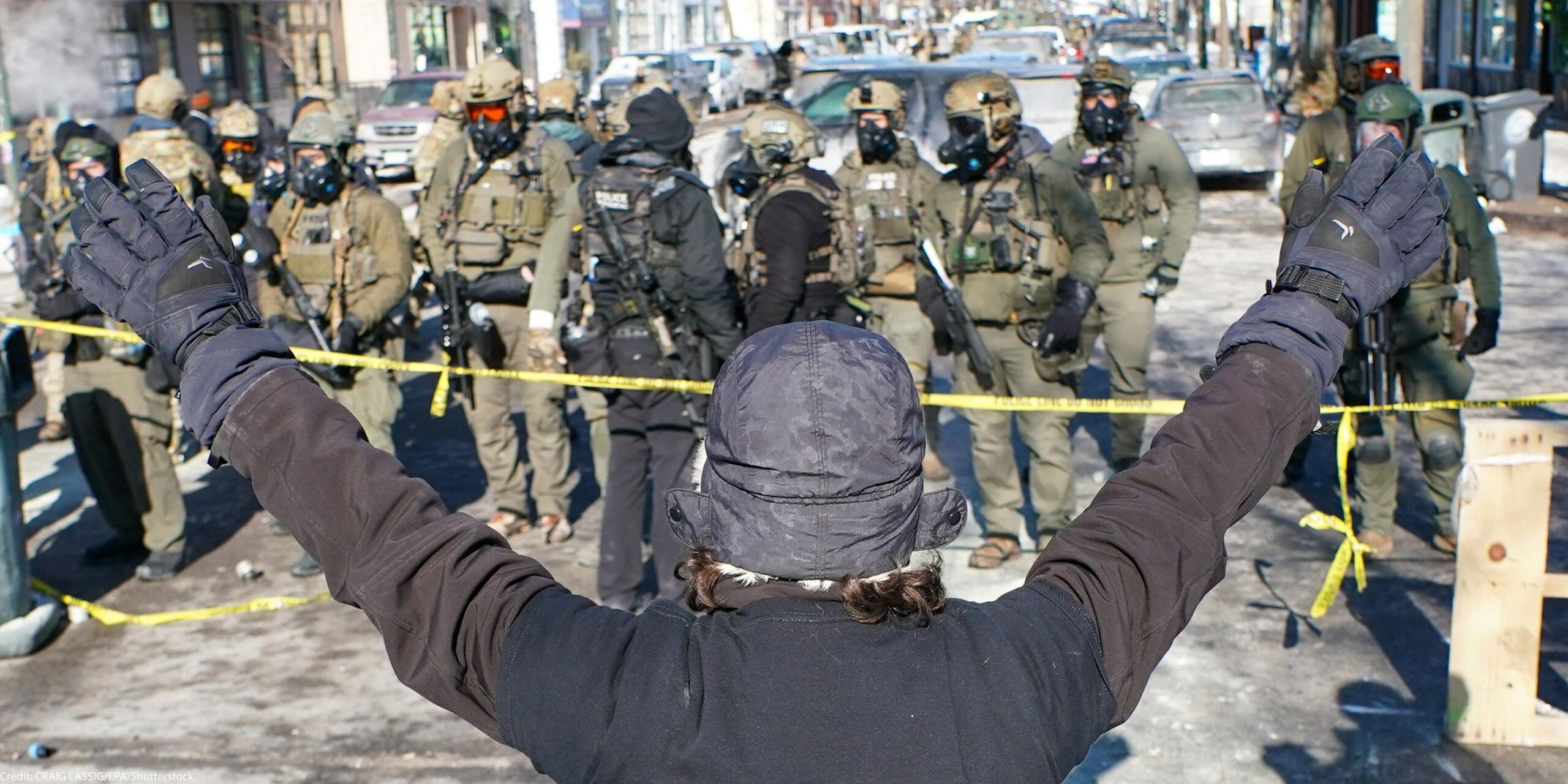
Minnesotans have lived in fear ever since the Trump administration announced a focus on Minnesota in immigration arrests and increased its deployment of federal forces by the thousands. Neighborhood watch groups organized to protect their immigrant neighbors, armed simply with whistles to alert others of ICE presence. Keeping passports on hand while going to work or running errands has become normal. Hundreds have marched in freezing temperatures calling for ICE to leave the city. Children have watched their fellow students being taken. ICE agents have violently retaliated against Minnesotans who have filmed them, leading to the tragic killing of U.S. citizens Renee Good and Alex Pretti.
Masked federal agents in military gear have continuously ignored basic human rights in their enforcement activity against Minnesotans, especially targeting Somali and Latino communities. And the ongoing effects continue to leave communities — citizens and immigrants alike — traumatized.
ICE Has Racially Profiled and Unlawfully Arrested Citizens
The Trump administration has been clear in its targeting of the Somali and Latino communities in Minnesota. President Trump has called people from Somalia “garbage,” has said “we don’t want them in our country,” and has told them to “go back to where they came from.” Following Trump's comments, ICE and CBP agents have indiscriminately arrested — without warrants or probable cause — Minnesotans solely because the agents perceived them to be Somali or Latino.
Such was the case for R.M. As he drove up towards his home, he rolled down his window to tell the agents that he needed to get into his driveway. Streets were snowy across the Twin Cities after a recent storm, and homeowners like R.M. knew they couldn’t park on the street to allow snow plows to clean the roads. The ICE agents refused to move as they were attempting to apprehend another individual. R.M.’s daughter began crying and yelling after seeing the masked agents. So he temporarily parked along the street, brought his daughter to safety inside with her mother, and came back out to record what was happening.
One agent walked towards him onto his private property, asking where he was from and for his identification. At the time, R.M. refused to show his identification, saying he was a citizen and that he was not required to show his documentation. R.M. asked the agent why he needed his documents. As R.M. testified (ICE declined to appear in court), the ICE agent responded saying “because of your accent.” R.M. told the agent he had a similar accent too, to which the agent got aggravated, handcuffed him, pulled him outside of his home’s fence, and dragged him to a van.
At this point, he told the agent he had his passport card in his wallet. Eventually, the agent let R.M. go. He recalled the agent saying to him in Spanish, “I don’t care if you’re a citizen, next time I’m going to take you. I don’t care if I have to do extra paperwork.”
The court found that R.M. and 22 other declarants were stopped and detained based solely on their race or ethnicity. As R.M. explained, his other neighbors who were white were outside yelling at the agents in his defense. But, “I was the only one picked that day.”
His daughter has been living in fear since. She doesn’t want to go outside and is constantly scanning for cars with tinted windows. Another time they went to get ice cream, she begged her father to take her home.
One day as they were driving, they witnessed 5-year-old Liam Conejo Ramos getting detained by ICE. She asked her dad, “They can take kids too?” When they returned, she closed the curtains in the house and used her family’s shoes to block the front door. That same day, they saw ICE agents four other times, constantly hearing whistles in the background.
Video Evidence Shows a Somali Citizen Brutally Arrested by ICE
Video evidence and testimony from 20-year-old M.H., who is Somali, detailed a two-hour interaction with ICE where he was unlawfully stopped and violently taken in December. “Every night when I go to sleep,” he said. “it replays in my head.” M.H. is also identified by his initials for fear of retaliation.
M.H. works in a predominantly Somali neighborhood of Minneapolis. The plaintiffs’ attorneys showed a video inside a back entrance stairwell to a Somali restaurant just outside of M.H.’s office that showed agents pushing him into metal fencing. He kept saying he’s a U.S. citizen to which an agent responded: “That don’t matter.”
The video showed agents push M.H. into the wall and handcuff him. Videos also showed an agent pulling him into a headlock outside and down to the ground in the falling snow.“I felt like I couldn’t breathe,” he said.
Agents pulled M.H. into an unmarked vehicle. Witnesses chased after the car on foot. His employer heard what was going on, came outside with a printed copy of his passport card from his employment records, and attempted to show the agents through the window of the car as they drove away.
In the SUV, the agents turned off M.H.’s phone. They tried to scan his face, he said. They didn’t ask any further questions and never showed any warrant. They never even asked for his identification, signalling there was no indication that they actually knew he was.
They took M.H. to the now infamous Bishop Henry Whipple Federal Building in St. Paul, the first stop for detained immigrants in Minnesota. When they stopped outside of the gate, they forced him outside, scanned his face again, and went back inside the vehicle. Then, they went inside the federal building. At this point, a government employee finally looked at M.H.’s identification. They also took his photo and fingerprints. Once they searched his name in a database, they let M.H. go.
“I’m worried about being stopped again just because of how I’m perceived,” he said. He used to walk to stores in the area, including for groceries. Every morning he used to stop at the popular Somali shopping joint Karmel Mall for a Somali-style coffee to take to work. Now, he avoids the mall entirely.
Life in Minnesota Remains Upended by DHS’s Abuses
Daily life in Minnesota remains upended by DHS’s unlawful, abusive immigration stop and arrest tactics. There are still federal agents in the Twin Cities, and they have spread throughout rural Minnesota. Communities have been arranging funds for rent assistance and groceries for people who have been sheltering at home to avoid ICE.
"Our lawsuits against the federal government for their egregious violations of the U.S. Constitution continue,” said the ACLU of MN. “There has been no indication that DHS plans to end the unlawful policies that they have used to violate the rights of thousands of Minnesotans."
If your arrest, detention, stop, or questioning, appeared to be the result of targeting and profiling based on your race or national origin, or if you have been arrested, detained, or stopped by federal immigration agents where the federal agents did not have a warrant or they had a warrant that did not apply to you please complete this form.